
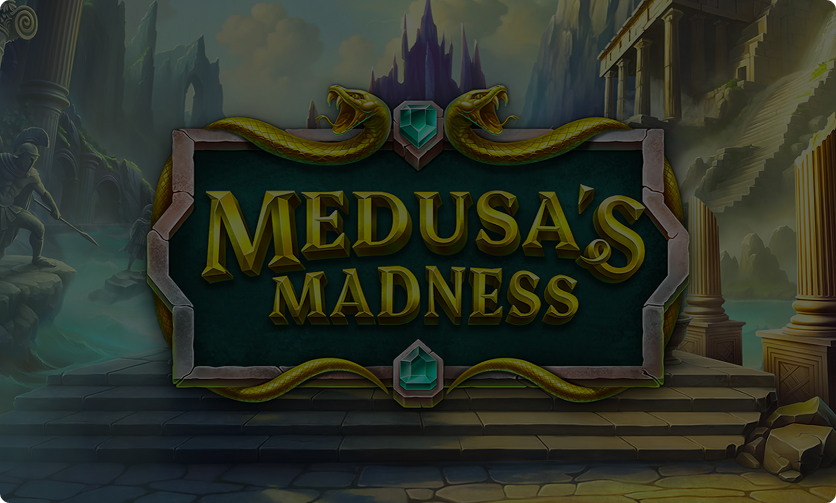
Play’n GO – Provider Behind Medusa’s Madness
Medusa’s Madness and many other online slot games distributed around the world were developed by Play’n GO. Headquartered in Sweden since 2005, they develop with a clear focus on regulated gambling markets and are known as one of the few game developers to have structured mathematical models for games, certified RNG systems, and a longstanding footprint in the industry.
One way to assess transparency, standards of fairness, and regulatory compliance when evaluating a slot game is by understanding the provider behind it. This guide provides an overview of Play’n GO, including information about the company’s history, licensing model, development approach, and position in the gaming industry.
Company Overview
| Parameter | Details |
|---|---|
| Founded | 2005 |
| Headquarters | Sweden |
| Industry | Online casino software development |
| Primary Focus | Video slots & casino games |
| Regulated Markets | Multiple European and international jurisdictions |
| Technology | HTML5-based cross-platform development |
Play’n GO develops proprietary content rather than aggregating third-party titles. This means game mathematics, features, and mechanics are internally designed and audited.
Regulatory Presence and Licensing
Play’n GO distributes games exclusively through licensed operators. The company holds and operates under several recognized regulatory frameworks, including jurisdictions such as:
- Malta
- United Kingdom
- Sweden
- Other European regulated markets
Licensing requirements typically involve:
- Certified Random Number Generator testing
- RTP validation
- Anti-money laundering compliance
- Responsible gambling integration standards
These frameworks require regular third-party audits to ensure operational integrity.
RNG Certification and Fairness
All Play’n GO titles, including Medusa’s Madness, operate using certified RNG systems.
RNG ensures:
- Each spin is independent.
- Outcomes are not influenced by previous results.
- Mathematical models align with declared RTP.
- No player behavior can alter outcome probability.
Independent testing laboratories evaluate these systems to verify compliance with regulatory standards. This contributes to transparency and trustworthiness.
Development Philosophy
Play’n GO is known for several core development principles:
1. Feature-Focused Slot Design
The provider often builds games around one or two clearly defined mechanics rather than excessive feature layering.
2. Mathematical Balance
Volatility and RTP structures are carefully calibrated. Games are typically designed to align feature mechanics with payout distribution.
3. Cross-Platform Optimization
All modern releases are developed in HTML5 to ensure mobile-first compatibility.
4. Regulated Market Commitment
Play’n GO publicly maintains a regulated-market-only distribution policy, avoiding unlicensed markets. This policy reinforces long-term sustainability and regulatory alignment.
Notable Titles in the Portfolio
Play’n GO’s portfolio includes several internationally recognized slot titles:
- Book of Dead
- Rise of Olympus
- Reactoonz
- Legacy of Dead
These titles demonstrate the provider’s range across mythology, adventure, fantasy, and high-volatility mechanics.
Medusa’s Madness fits within the mythology category, alongside other Greek-themed releases.
E-E-A-T Evaluation of Play’n GO
From an E-E-A-T (Experience, Expertise, Authoritativeness, Trustworthiness) perspective:
Experience
Over 15 years of development history with a consistent release schedule.
Expertise
Structured mathematical models with clearly documented volatility and RTP.
Authoritativeness
Distribution through licensed operators in regulated jurisdictions.
Trustworthiness
Third-party auditing, published RTP disclosures, and regulatory oversight.
This framework supports informed user evaluation of provider credibility.
Technology and Platform Integration
Play’n GO transitioned fully to HTML5 development, eliminating legacy Flash-based systems.
Advantages include:
- Seamless mobile integration
- Cross-browser compatibility
- Stable performance across device types
- Reduced technical vulnerability
Games are optimized for:
- Desktop
- Tablets
- Smartphones (iOS and Android)
Medusa’s Madness reflects this mobile-adaptive design approach.
Responsible Gambling Commitment
Play’n GO publicly supports responsible gambling initiatives and integrates compliance measures into game development.
Typical responsible design elements include:
- Clear paytable documentation
- Transparent RTP disclosure
- No misleading win messaging
- Compliance with operator-imposed limits
- Optional removal of certain features (e.g., Gamble) in restricted markets
The provider also aligns with evolving European regulatory frameworks that limit aggressive bonus communication.
Market Positioning
Play’n GO is positioned as:
- A mid-to-large scale European developer
- A regulated-market-focused supplier
- A feature-driven slot designer
- A mobile-first development company
The provider does not market games with unrealistic promises or exaggerated payout messaging, instead emphasizing structural transparency.
How Provider Choice Impacts Players
Choosing a game from a regulated provider can influence:
- Transparency of mathematical models
- Compliance with regional laws
- Availability of responsible gambling tools
- Reliability of platform integration
While no provider can eliminate gambling risk, operating under licensed frameworks improves accountability standards.
Summary: Play’n GO as a Regulated Developer
Play’n GO is an established European slot developer operating under regulated frameworks with certified RNG systems and documented RTP transparency.
In the context of Medusa’s Madness, the provider’s structured feature design and volatility modeling reflect a consistent development philosophy:
- Transparent mathematics
- Concentrated bonus mechanics
- Mobile optimization
- Compliance-first distribution
Understanding the developer behind a slot supports more informed engagement decisions.